Agroecology in Action:
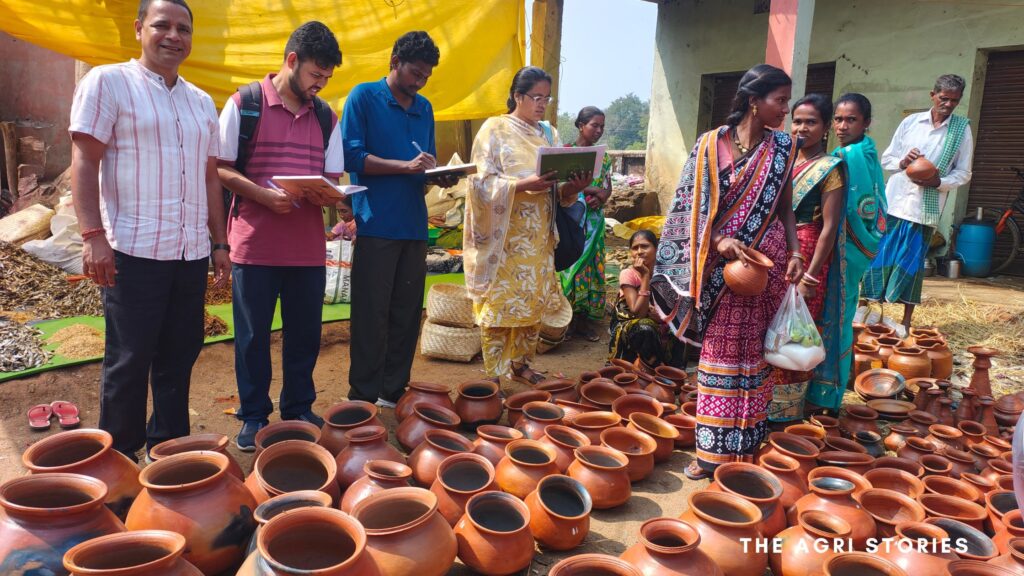
Every Wednesday, the otherwise quiet town of Kundra in Koraput district turns into a hub of activity. Farmers, tribal communities, artisans, and traders gather in the weekly market. They are not just to buy and sell, but to connect, exchange knowledge, and sustain a living food system rooted in tradition.
As part of the 3-Month Course on Agroecology for Food Systems Transformation, I had the opportunity to explore this market as a field learning exercise. The course emphasizes experiential learning by observing, reflecting, and understanding real-world food systems. The Kundra market offered us exactly what we wanted.
My First Impressions: A Market Full of Life
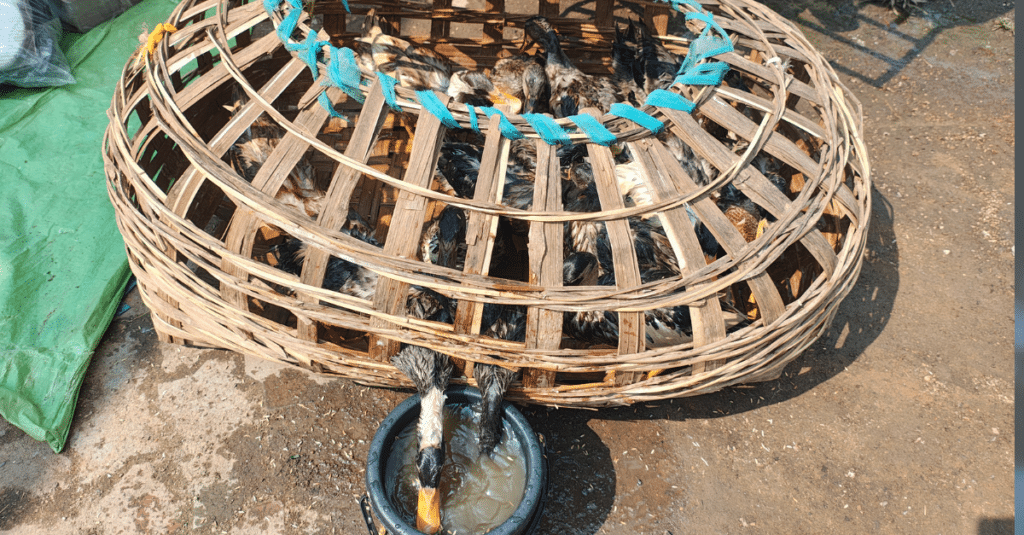
As we entered the market, one of the first sights was ducks being sold at the entrance priced at Rs. 500 per pair. People arrived carrying their produce, many using autos as their primary mode of transport. This simple observation revealed the strong link between rural mobility and market access. Before, people use to come bare foot walking around 3-4 kilometers from their village.
Inside, the market was buzzing with energy. Women, more than men, dominated the space, selling vegetables, processed foods, and traditional items. Their active participation clearly highlighted the central role women play in local food systems.
Diversity Everywhere:
What stood out most was the incredible diversity of produce available in the market. From fresh vegetables like tomato, brinjal, beans, pumpkins, ash gourd, papaya, and spring onions to pulses such as urad dal, mung dal, arhar dal, horse gram, and local varieties like Dangar Rani. The market was a showcase of biodiversity.
We also observed traditional foods like badi (sun-dried dumplings made from urad dal and ash gourd), and different forms of turmeric—raw, dried, and aged—reflecting indigenous knowledge of processing and storage.
This diversity is not just about crops, it is about nutrition, resilience, and sustainability, which are core principles of agroecology.
Chapra Chutney:
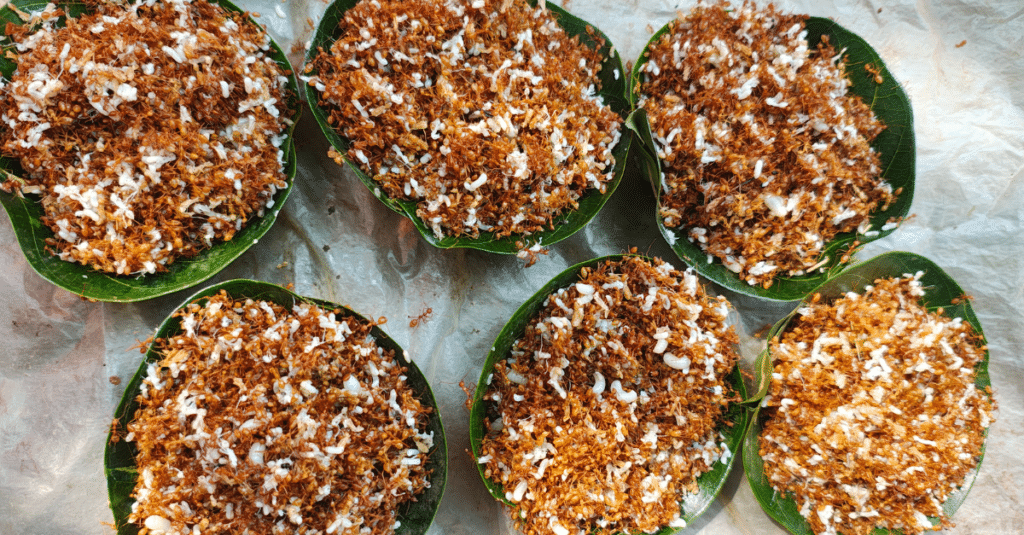
One of the most fascinating discoveries was chapra- red ants and their eggs, used to prepare a spicy and tangy chutney. This traditional delicacy is often consumed with ragi porridge and is believed to have medicinal properties, especially during fever.
Such practices reflect the deep connection between tribal communities and their natural environment. The tribals still depend on the forest for their food and livelihood. It is a reminder for us that food is not just about consumption, it is about culture, health, and knowledge passed down through generations. The small basket of chapra was just Rs.10.
Beyond Farming: Livelihoods and Local Economy
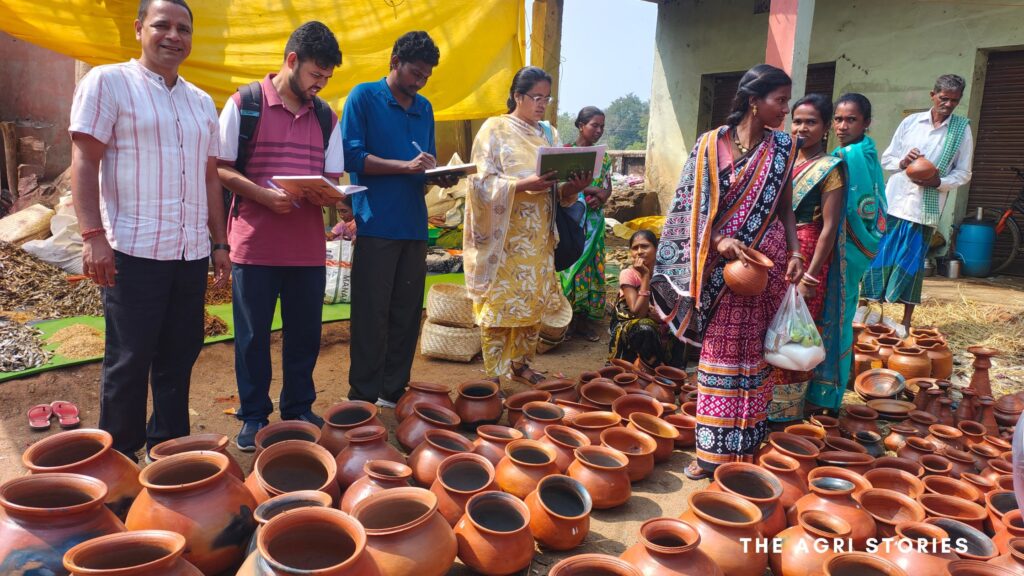
The market was not limited to agricultural produce. Self-Help Groups (SHGs), particularly women, were selling pottery items ranging from ₹20 to ₹80. Bamboo artisans displayed beautifully crafted baskets and kula—traditional winnowing trays used for cleaning grains.
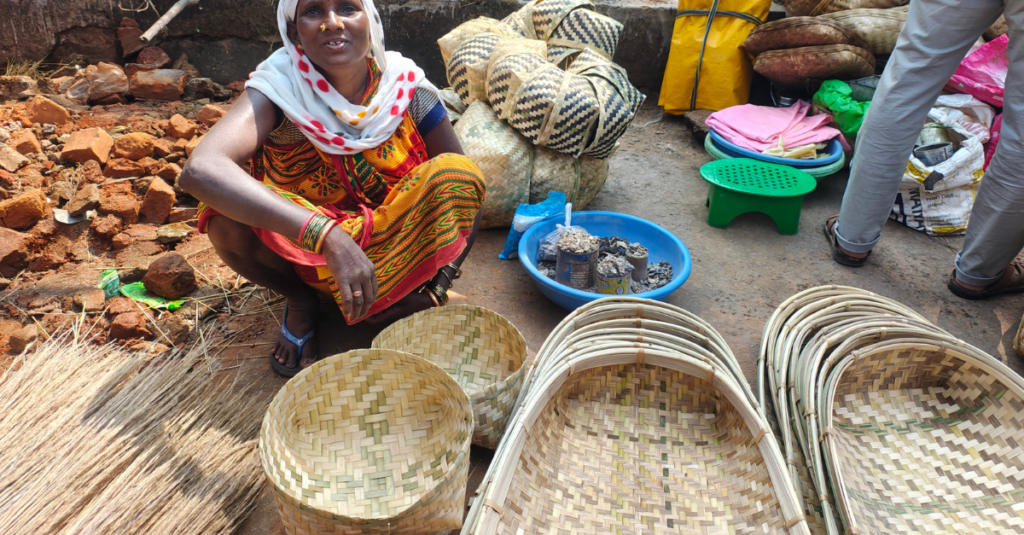
These activities highlight how agroecology supports diversified livelihoods, reducing dependence on a single source of income and strengthening rural economies.
Forest to Market: Nature’s Contribution
Tribal communities also brought forest produce such as Haritaki (Harad) and Jhuna Dhoop, showcasing their dependence on and sustainable use of forest resources.
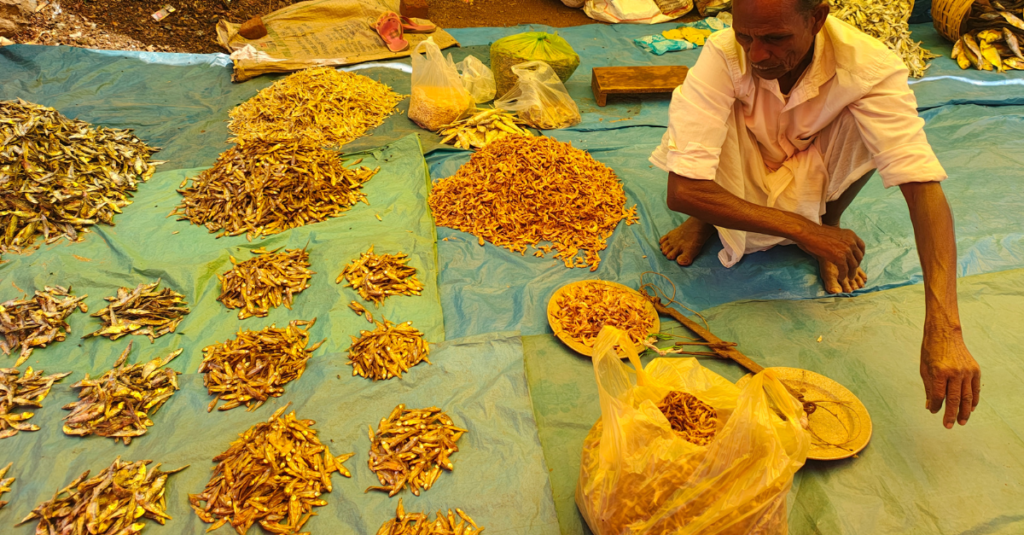
We also found tobacco leaves, dried and treated, being sold in the market. Additionally, a wide variety of dry fish was available – some locally sourced, while a significant portion came from Andhra Pradesh, indicating both local production and external linkages.
Role of Women: The Backbone of the Market
One of the most powerful observations was the dominance of women in the marketplace. From selling vegetables to value-added products like bondi, sev, gajja, and laddoos made of puffed rice and jaggery, women were actively engaged in economic activities.
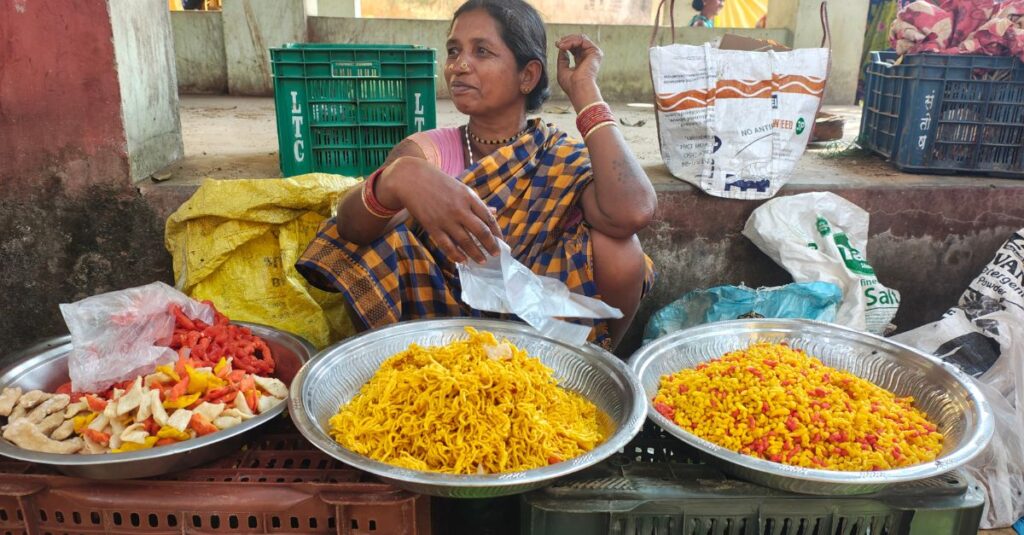
This reflects an important agroecological principle—equity and social inclusion. When women participate actively in markets, it strengthens household income, community resilience, and food security.
Market Linkages: Opportunities and Challenges
The market also revealed important dynamics of value chains. For instance, we observed autos and pickup vans collecting pumpkins in bulk, often handled by middlemen. While this ensures market access, it also raises questions about fair pricing for farmers.
Such observations highlight the need to strengthen farmer collectives and direct market linkages, ensuring better income for producers.
What makes the Kundra market special is its strong local character. Most of the produce is freshly harvested and brought directly by farmers. The use of natural materials like bamboo, the presence of traditional foods, and minimal processing all point toward a low external input, sustainable food system.
This aligns perfectly with the principles of agroecology—localization, resilience, recycling, and cultural preservation.
My Reflections: What This Market Teaches Us
The weekly market at Kundra is not just a place of trade, it is a pure reflection of a functioning agroecological food system. It demonstrates – diversity in crops and diets, local knowledge and traditions, women-led economic participation, sustainable use of natural resources, strong community connections.
At the same time, it also highlights areas for improvement, such as reducing dependence on middlemen and strengthening local value chains.
Conclusion: Strengthening Local Food Systems
This field experience was truly enriching. It reinforced the idea that our food systems must be local, diverse, and community-driven rather than heavily dependent on distant markets.
Kundra’s weekly market stands as an example of how traditional practices and agroecological principles can come together to create a resilient and sustainable food system.
As we move towards transforming our food systems, such local markets offer valuable lessons for us.
This is not just a story—it’s a reflection of our food future.
What did you learn from this experience?
What changes do you think are needed in our current food system?
I invite you to share your thoughts, ideas, and suggestions in the comments.
Let’s start a meaningful conversation on building a better, more resilient food system for all.
Author: Tapas Chandra Roy, Block Agriculture Officer, DA&FE, Govt. of Odisha. Documenting and disseminating success stories of farmers to inspire millions of farmers across India.
If you wish to submit any inspiring stories of farmers, you can send them to this email address: [email protected]. Please ensure your submission includes a Word document and high-resolution photographs.