Duryodhana Pujari – A Farmer Who Farms with Heart
Duryodhana Pujari:
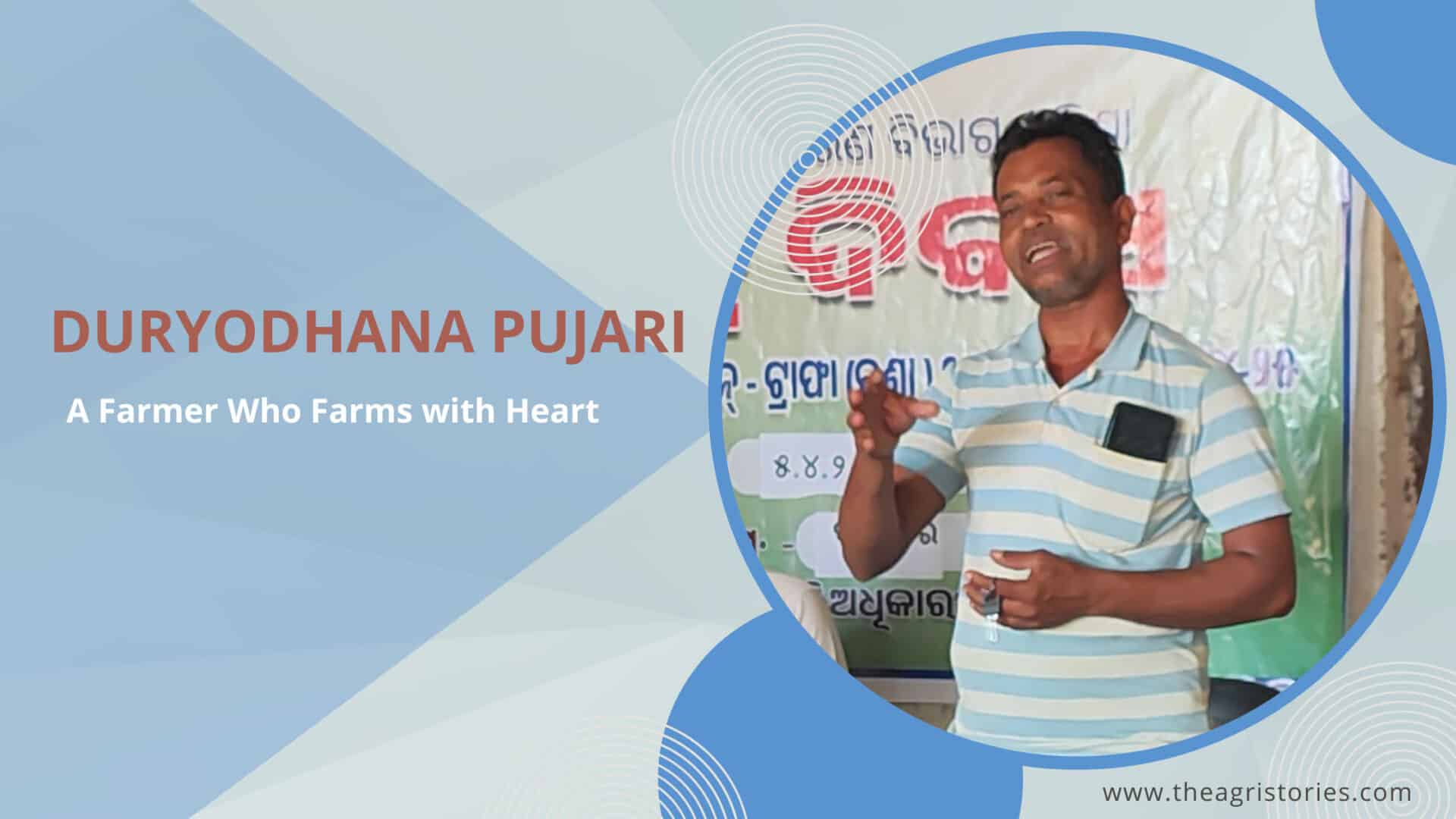
When I first visited Disariguda village under Bagderi Gram Panchayat in Kundra block, I was assigned to spend some time with a farmer as part of my agroecology course field work. I met Duryodhana Pujari, a 53-year-old farmer whose quiet dedication to farming left a deep impression on me. He was working in his field, his hands were full of soil.
Duryodhana Pujari lives in Disariguda with his wife and three sons, and together they form the backbone of their farm. Like many farmers in the region, his resources are modest. He owns three acres of rainfed paddy land and one acre of irrigated vegetable land supported by a solar borewell. But what makes his farm special is not its size but the the diversity, innovation, and care that goes into every corner of the land.
Duryodhana Pujari is the lead farmer of the Jay Maa Santoshi Farmer Field School (FFS) in Disariguda. Since September 2024, he has been associated with the Green Evolution Project, and his field was selected as a model demonstration plot. PRAGATI, Koraput implementing the project in Kundra Block with support of Welthungerhilfe (WHH).
The reasons were simple, his farm is easily accessible for other farmers as it is beside the main ground, he is cooperative, always eager to learn, and above all, he has a genuine passion for cultivating crops in a natural and sustainable way.
In the demonstration plot, he grows a wide range of crops like brinjal, tomato, beans, garden peas, cabbage, cauliflower, onion, garlic, indigenous maize, and coriander. He maintains so much diversity round the year. Bright orange marigold flowers stand between vegetable rows, acting as trap crops to protect vegetables from pests, while castor plants line the field boundaries, quietly doing their role in pest management.
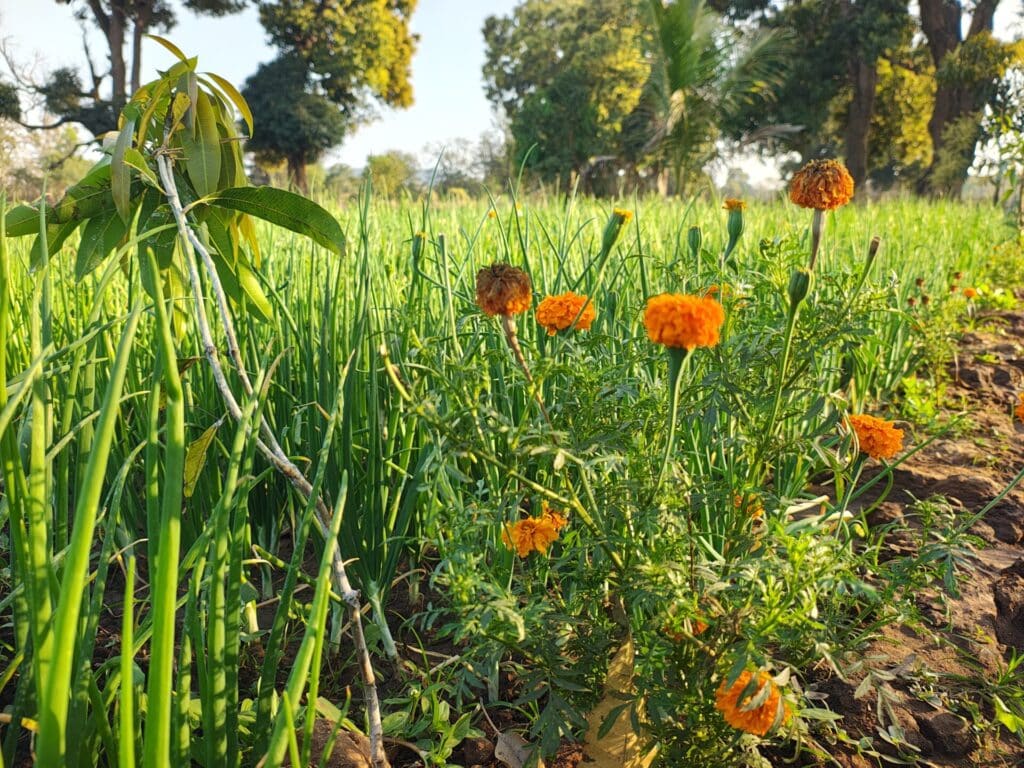
In another patch, I noticed pigeon pea plants growing alongside finger millet. He explained that this mixed cropping system helps maintain soil fertility and ensures better use of space and nutrients.
His paddy fields are equally interesting. Instead of traditional broadcasting, he practices line transplanting in both paddy and millet, making crop management easier and improving productivity.
One thing that stood out during my visit was his dedication to seed conservation. Duryodhana Pujari carefully preserves seeds of several crops like flat bean, broad bean, cowpea, finger millet, indigenous maize, barnyard millet, and the traditional Kalajeera paddy.
Every kharif season he cultivates about 0.20 acres of Kalajeera, an indigenous aromatic rice variety which got a GI tag recently in Koraput district and from around 1.5 quintals of harvest he earns nearly ₹6000, selling it at Rs.40 per kilogram.
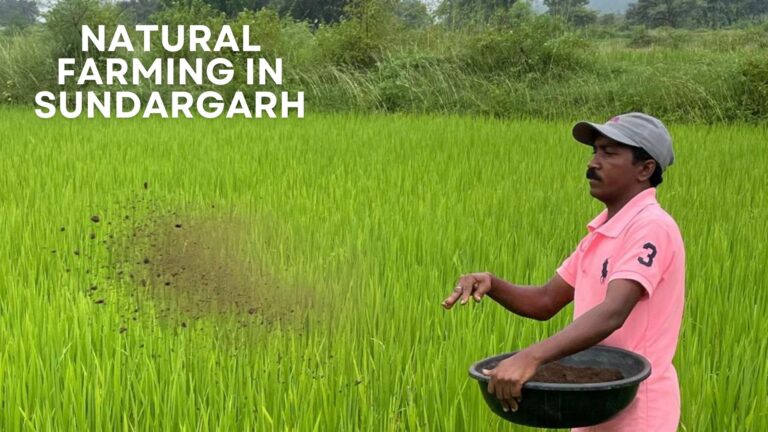
His farming is deeply rooted in natural farming practices. With support from the project, he established a Bio-Input Resource Centre (BRC) at his farm. Here, with the help of his family, he prepares natural formulations like Jeevamrit, Ghana Jeevamrit, Neemastra, Agniastra, and Brahmastra. These are made using cow dung, cow urine, and leaves of neem, pongam (karanj), custard apple, calotropis, and guava.
To collect cow urine efficiently, he was supported with a concrete cow shed flooring with a collection pit.
He also practices seed treatment using Bijamrit, especially for crops like potato (Jyoti variety), which he grows mainly for household consumption.
Another fascinating practice he follows is relay cropping of vegetables. Instead of planting all crops at once, he staggers the sowing so that harvesting happens continuously. This helps him maintain a steady supply of vegetables in the local market and prevents sudden oversupply.
During the rabi season, his vegetable sales bring regular income. On average:
He sells around 50 kg of tomatoes every week, earning Rs.1000–1200.
Beans (25–30 kg per week) bring him Rs.1200–1400.
Cabbage and cauliflower (25–30 kg each) fetch about Rs.800–1000 per month.
In the kharif season, crops like bitter gourd and ridge gourd earn him about Rs.1500–1800 per week.
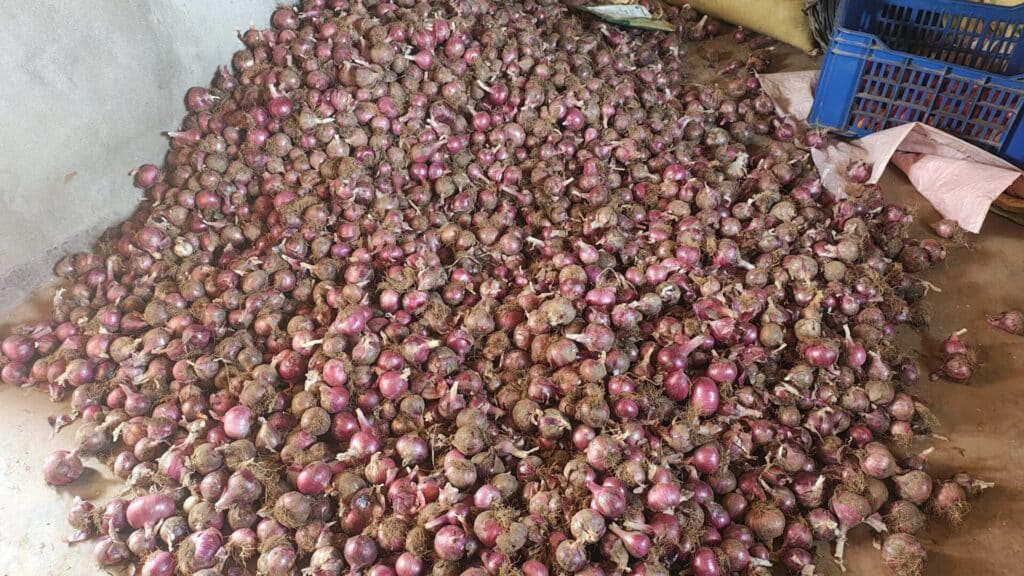
But income is only one part of his farming story. What truly makes his farm remarkable is the ecological balance he has created.
Along the field bunds, one can see an agri-horticulture system in practice. Trees like drumstick, papaya, litchi, mango, coconut, and sapota grow around the vegetable fields, creating layers of production and improving biodiversity.
He also believes strongly in recycling farm resources. Agricultural residues are converted into compost through fortified compost pits, ensuring that nothing goes to waste.
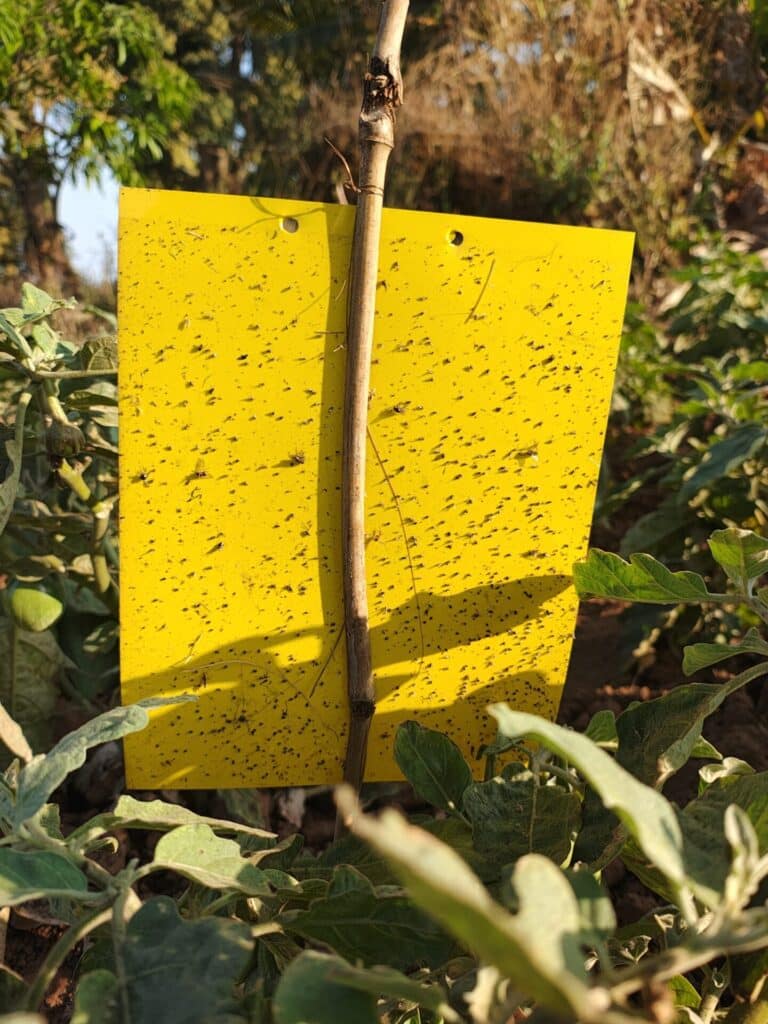
For pest management, he installs sticky traps and pheromone traps, and weeding is done manually, mostly by family members. In fact, he rarely hires outside labour. Most of the farm work is carried out by his family, which keeps costs low and strengthens their connection to the land.
Livestock also plays an important role in his farming system. He owns three bullocks, one cow, and about 15–20 poultry birds (hens and ducks). These animals are integrated into the farm, contributing manure and supporting the natural farming cycle.
While walking through his field, he told me something with a smile that stayed with me:
“Vegetables grown with Jeevamrit taste better and stay fresh for longer.”
And the villagers seem to agree with him. Farmers and buyers from nearby villages often come early to purchase his fresh vegetables directly from the field, appreciating the quality and freshness.
Beyond farming, Duryodhana Pujari plays an important role as a knowledge sharer. As the lead farmer of the Farmer Field School, he regularly trains fellow farmers on SIFS modules and natural farming practices. He never hesitates to explain his methods or demonstrate techniques.
Whenever there is a farmer training programme in Bagderi, he is almost always present, either learning something new or helping others learn.
During my interaction with him, I realized that he is not just cultivating crops he is cultivating confidence among farmers.
Spending time with Duryodhana Pujari made me understand what agroecology truly looks like on the ground. It is not only about techniques or technologies, it is about people, relationships, knowledge, and respect for nature.
In a small village like Disariguda, with just a few acres of land, Duryodhana Pujari has created a living example of sustainable farming.
And as I left his farm that day, I felt that farmers like him are the quiet heroes of our food systems, people who nurture the soil, conserve seeds, support their communities, and inspire others simply through their actions.
Author: Tapas Chandra Roy, Block Agriculture Officer, DA&FE, Govt. of Odisha. Documenting and disseminating success stories of farmers to inspire millions of farmers across India.
If you wish to submit any inspiring stories of farmers, you can send them to this email address: [email protected]. Please ensure your submission includes a Word document and high-resolution photographs.