International Year of the Woman Farmer-2026
At dawn in the tribal hills of Koraput, the fields begin to move even before the sun rises. Women walk barefoot along narrow bunds, baskets balanced on their heads, sickles in their hands. Some are heading to millet plots, others to vegetable gardens, and many to forests where food and medicine grow side by side. Farming here is not just an occupation; it is a rhythm of life, and women are its steady heartbeat.
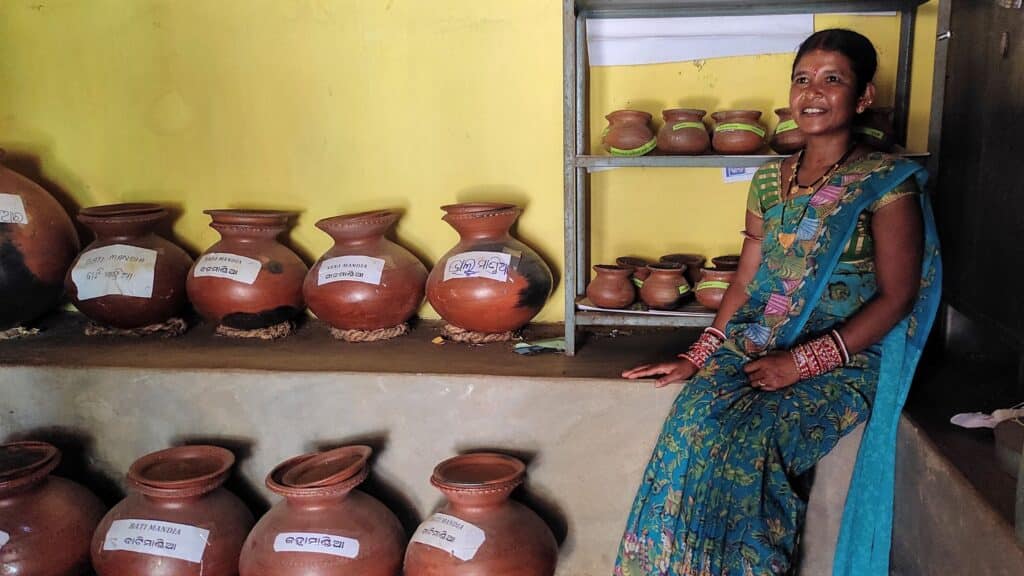
One such woman is Raimati Gheuria. Known in her village for guarding indigenous seeds like family heirlooms, she has spent years selecting, saving, and sharing traditional varieties of millets, paddy & pulses. Her seed baskets are not stored in cold rooms but in mud houses, a living library of biodiversity.
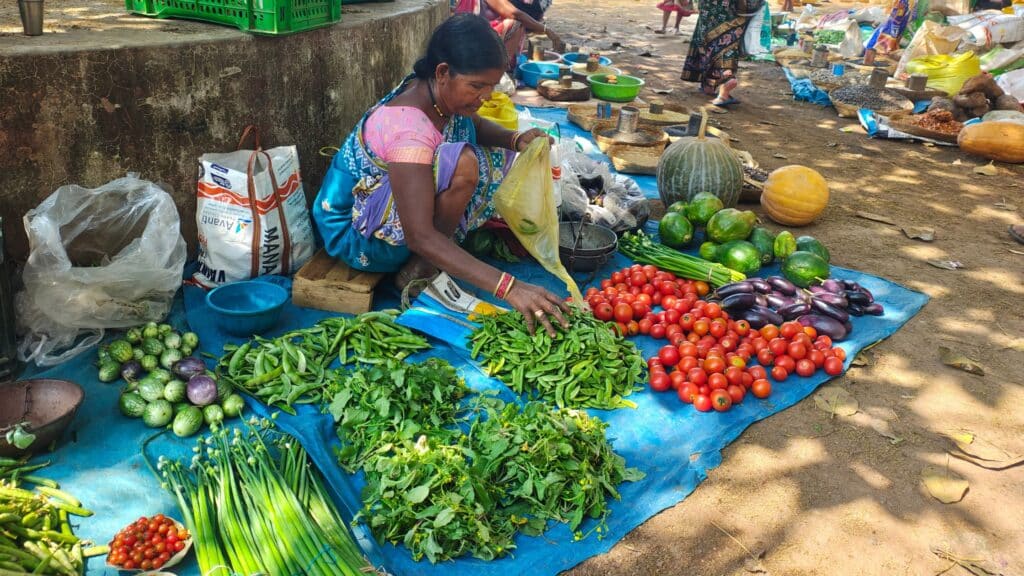
Recently, while exploring the weekly market of Kundra, I saw another side of this story. Rows of women sat behind displays of leafy greens, tubers, forest fruits, millets, and local rice varieties. The food diversity was breathtaking. These women were not just sellers; they were farmers, processors, traders, and nutrition gatekeepers—quietly managing their own food system.
This is why the declaration of 2026 as the International Year of the Woman Farmer matters so deeply.
What is the International Year of the Woman Farmer 2026
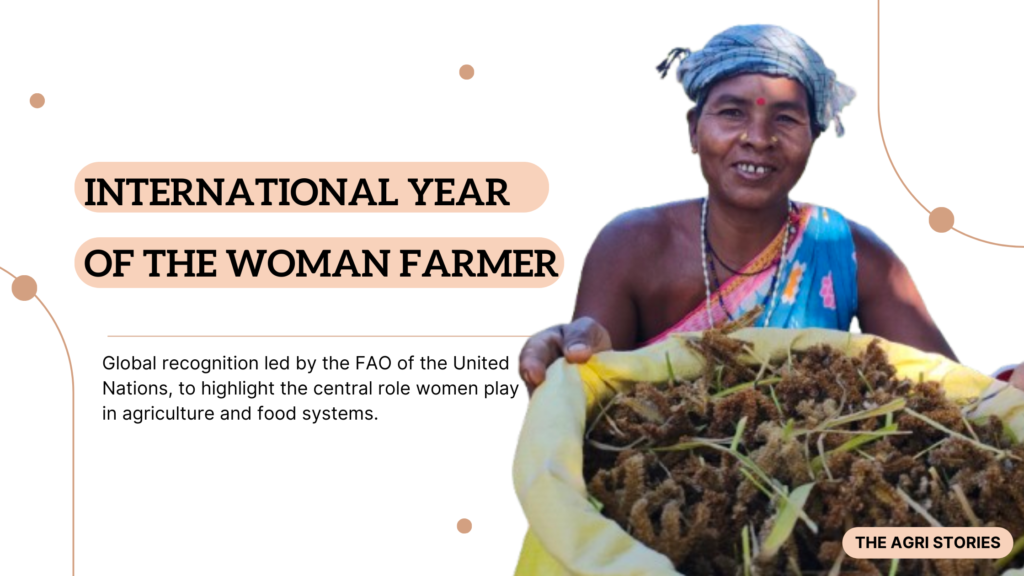
The International Year of the Woman Farmer 2026 is a global recognition led by the Food and Agriculture Organization of the United Nations to highlight the central role women play in agriculture and food systems. Across the world, women produce, process, and market food, yet their work remains undervalued and undercounted.
The year focuses on:
- Acknowledging women as farmers in their own right
- Strengthening their access to land, credit, and technology
- Recognizing their role in climate resilience and biodiversity
- Making food systems more inclusive and equitable
- This is not just a celebration year; it is a call for transformation.
Role of women farmers in India:
In India, women contribute nearly half of the agricultural workforce. They sow seeds, transplant paddy, harvest crops, rear livestock, collect forest produce, and manage household nutrition. In tribal regions like Koraput, their role is even more profound.
Here, women are:
- Custodians of indigenous seed varieties
- Managers of mixed cropping systems
- Keepers of traditional food knowledge
- Key players in local markets and barter systems
Women like Raimati Gheuria are conserving genetic diversity that modern agriculture is rapidly losing. Her work ensures that drought-tolerant millets and pest-resistant paddy continue to survive—quietly safeguarding future food security.
In Kundra market, I observed how women farmers are directly connected to consumers. They bring what their fields produce: pumpkin flowers, amaranthus leaves, tubers, tamarind, and millet grains. This short food chain reduces dependency on middlemen and keeps nutrition within the community.
Challenges they face:
Despite their massive contribution, women farmers face systemic barriers:
1. Land ownership
Most women work on land they do not own. Without land titles, they remain invisible in official records and cannot access institutional credit or crop insurance.
2. Access to resources
Inputs like quality seeds, irrigation, tools, and fertilizers are usually registered in men’s names, even when women do the farming.
3. Recognition as farmers
They are often called “helpers” rather than farmers, which denies them identity, authority, and entitlements.
4. Market limitations
Women producers struggle with transport, storage, and bargaining power in markets dominated by men.
5. Climate vulnerability
Erratic rainfall and crop failures hit women harder because they are responsible for household food security.
Yet, despite these challenges, they persist—innovating, conserving, and feeding their families and communities.
Why 2026 is important:
The year 2026 is symbolic because the world is facing three major crises:
- Food insecurity
- Climate change
- Biodiversity loss
Women farmers stand at the intersection of all three. Their farming systems are often low-input, diverse, and climate-adaptive. Recognizing them is not charity; it is smart policy.
In Koraput, tribal women cultivate multiple crops in one field: millets, pulses, oilseeds, and vegetables together. This diversity reduces risk, improves soil health, and ensures year-round food. These are lessons modern agriculture desperately needs.
2026 provides an opportunity to:
- Rewrite policies with women at the center
- Redesign extension systems to reach women
- Invest in women-led producer institutions
- Celebrate local food systems as national assets
Related Post: Transforming Gender-Responsive Agricultural Extension: Reflections and Learnings from the International Workshop
What needs to change:
1. Legal recognition
Women must be recognized as farmers in records and schemes, not merely as labourers. Joint land titles should become the norm.
2. Seed sovereignty
Community seed banks led by women—like the work of Raimati Gheuria—should be supported, documented, and scaled.
3. Market empowerment
Women must be supported with storage, transport, and branding facilities so that they control value chains, not just production.
4. Institutional leadership
In Koraput, women are not just members but leaders of Farmer Producer Organizations such as Koraput Nari Shakti FPC Limited, Nandapur, Sabujima Farmers Producer Company Limited, Boipariguda & Bamandei Producer Company Ltd., Kundra. These FPOs show how women-led institutions can influence cropping choices, input supply, and market access for entire communities.
5. Knowledge systems
Extension services must respect women’s traditional knowledge and combine it with scientific support, not replace it.
Personal reflection:
As someone who works closely with farmers, what struck me most in Kundra market was not just the produce but the confidence with which women negotiated prices, explained crop varieties, and discussed the biodiversity & food systems.
The women-led FPOs of Koraput prove that when women organize, they do not just improve their incomes—they inspire other farmers, promote diversified crops, and rebuild trust in local food systems.
To me, the International Year of the Woman Farmer is not about speeches in conference halls. It is about recognizing these women in policy, in markets, and in our minds.
Call to action:
In 2026, let us not reduce the woman farmer to a poster image. Let us act.
For policymakers:
- Ensure land and scheme access in women’s names
- Support women-led FPOs and seed banks
- Invest in local food markets
For institutions and NGOs:
- Train women as agri-leaders, not just beneficiaries
- Document and promote indigenous practices
- Link women farmers directly to consumers
For citizens:
- Buy from women farmers
- Respect local foods
- Share their stories
The hands that feed the world are often invisible. In 2026, let us make them visible—not just for a year, but for generations to come.
When a woman farmer thrives, a village eats better, a forest breathes easier, and a future becomes possible.
Author: Tapas Chandra Roy, Block Agriculture Officer, DA&FE, Govt. of Odisha. Documenting and disseminating success stories of farmers to inspire millions of farmers across India.
If you wish to submit any inspiring stories of farmers, you can send them to this email address: [email protected]. Please ensure your submission includes a Word document and high-resolution photographs.