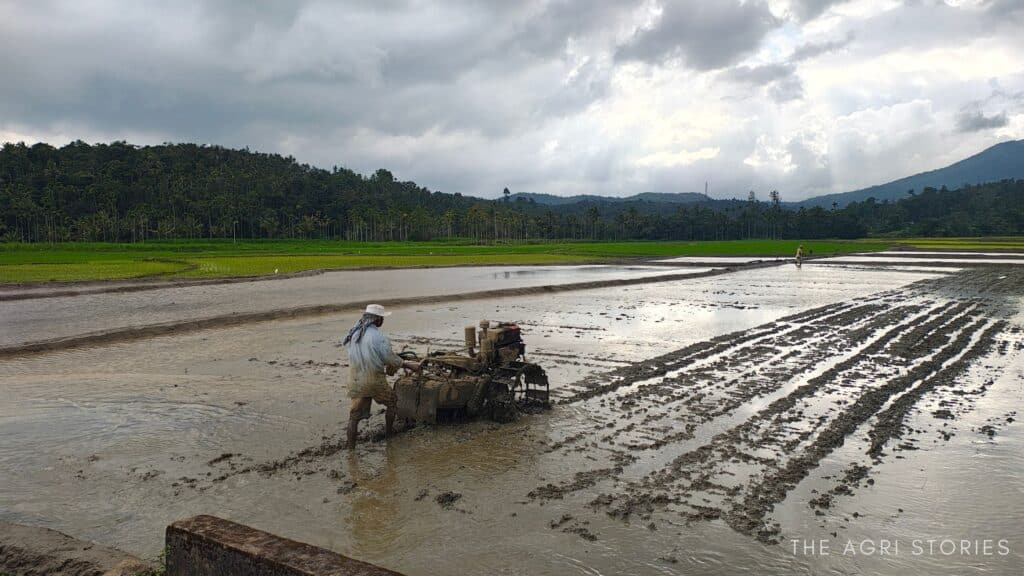
Climate change is often discussed in global conferences, policy documents, and scientific reports. Yet, its most powerful solutions are sometimes found far from boardrooms—rooted instead in villages, shaped by people, and sustained through collective action. My recent visit to Wayanad, Kerala, offered a compelling glimpse into such a grassroots model of climate resilience—one that places communities at the center of climate action.
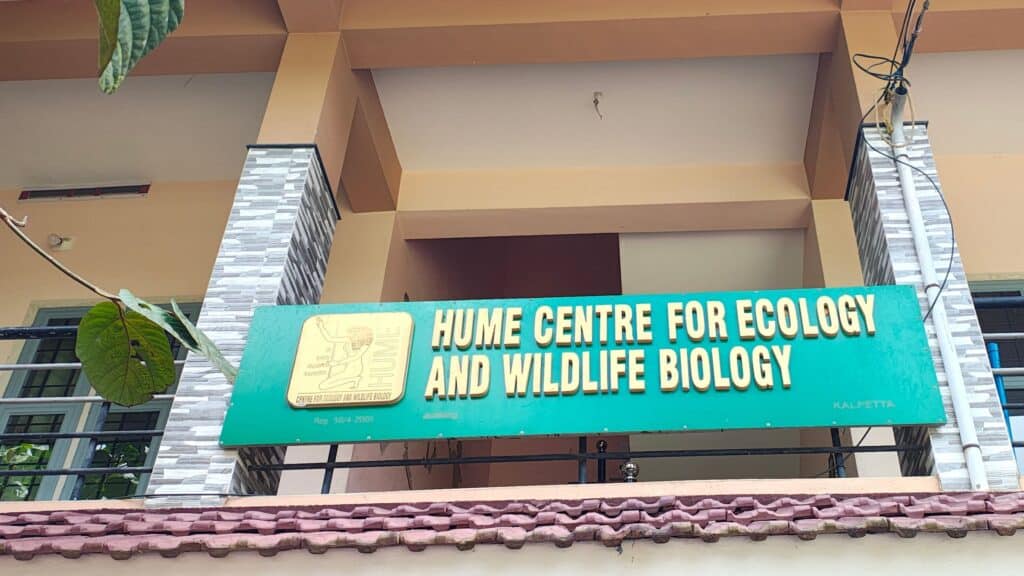
What I witnessed was not just a project. It was a living, breathing system where farmers, local institutions, and science converge to create a resilient future. The Hume Centre for Ecology and Wildlife Biology has taken a significant initiative in Wayanad by working closely with local communities to address the challenges of climate change.
Wayanad’s approach to climate action stands out because it is not imposed—it is owned. The district has transformed climate monitoring into a participatory movement, empowering farmers with real-time data and decision-making capabilities.
One of the most remarkable initiatives is the community-based rainfall tracking system. The entire district was scientifically divided into 108 grids, each covering approximately 25 square kilometers, using ArcGIS mapping tools. Out of these, 25 grids were completely forested and uninhabited, highlighting the region’s ecological diversity.
Within each inhabited grid:
- Local individuals were identified and trained
- Rain gauges were installed
- Data collection became a daily community practice
This is not just data collection—it is democratization of climate intelligence.
Climate Managers: Bridging Science and Society
At the heart of this system lies a powerful human network—the Community Climate Managers.
A total of 43 trained climate managers act as the backbone of Wayanad’s climate resilience model. These are not external experts but local coordinators who understand both the land and the language of their communities.
Their role is transformative:
- Translating scientific weather data into actionable insights
- Coordinating daily rainfall and weather data collection
- Facilitating emergency responses during extreme weather events
- Supporting farmers in climate-sensitive decision-making
Each Panchayat operates a dedicated WhatsApp group, integrating:
- Rapid Response Teams (RRT)
- Emergency Response Teams (ERT)
- Biodiversity Management Committees (BMC)
- Local farmers and stakeholders
This ensures real-time communication and decentralized decision-making, a critical factor in responding to climate variability.
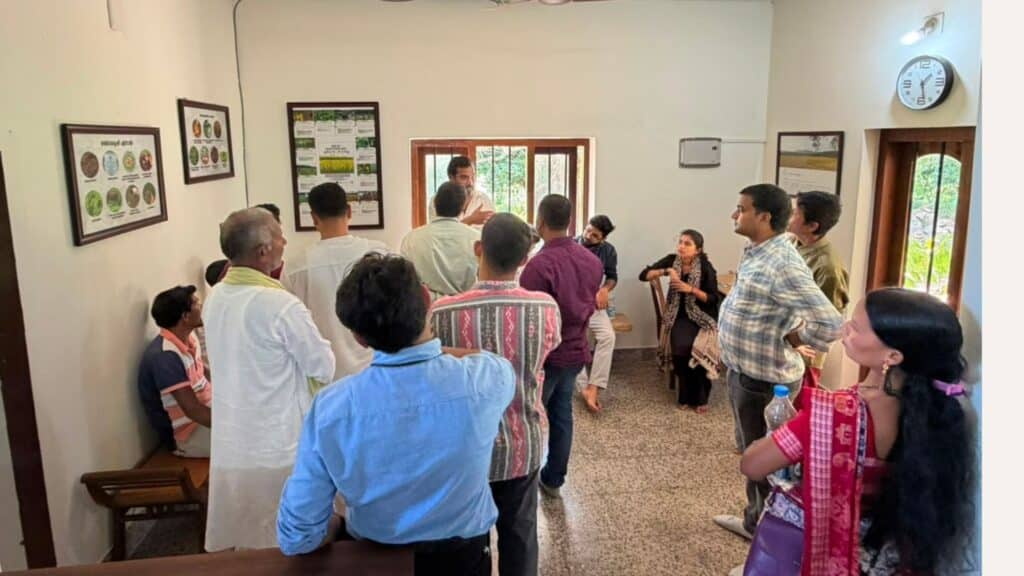
Rajesh Krishnan, CEO of TAPCO, a Wayanad-based Farmer Producer Organisation, emphasized the critical role of farm-level rain gauge systems in enabling informed agricultural decision-making. He noted that localized rainfall data empowers farmers to better plan sowing, irrigation, and crop management practices, thereby reducing climate-related risks.
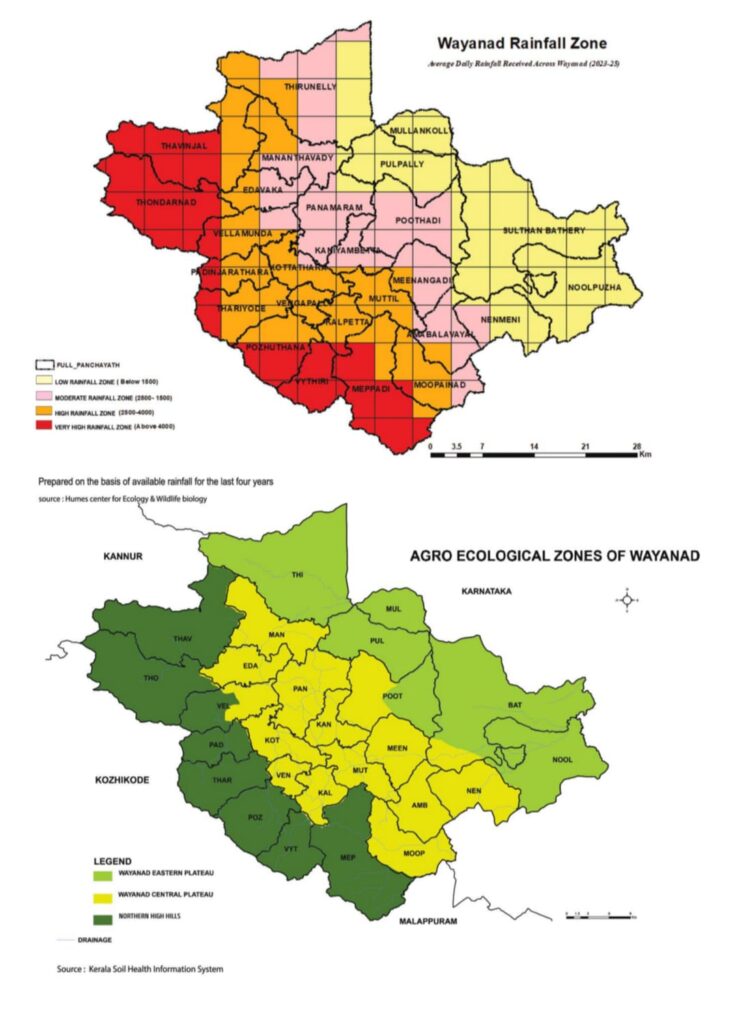
He further highlighted the intrinsic connection between weather, land, and rainfall, which varies significantly across Wayanad’s diverse landscape. The district is broadly classified into three distinct agro-ecological zones: the Eastern Plateau, Central Plateau, and Northern High Hills. Among these, the Northern High Hills receive exceptionally high rainfall, often exceeding 4000 mm annually, making it a unique microclimatic region.
Such spatial variability underscores the importance of hyper-local weather monitoring systems, as even small geographical differences can lead to significant variations in rainfall patterns. Integrating this localized data into farming decisions is proving to be a key strategy in strengthening climate resilience among farmers in the region.
Water as a Decision Tool: Real-Time River Monitoring
Beyond rainfall, Wayanad has taken a significant step toward real-time river flow monitoring.
Using simple yet effective water level observation systems, communities track river behavior continuously. This data directly informs:
- Irrigation planning
- Crop selection
- Risk mitigation during floods or dry spells
For farmers, this means shifting from reactive to proactive agriculture—a fundamental shift in climate adaptation.
My understanding of climate resilience deepened further through participation in the project in 2020.
“Water Management in Rainfed Areas for Improving Livelihood Security of Small-holder Farmers – Out-scaling Australian Supported R4D”
This initiative, led by CSIRO (Australia) in collaboration with NRAA, WASSAN, and the Revitalising Rainfed Agriculture (RRA) Network, was a two-year intensive learning program spanning Odisha, Karnataka, and Andhra Pradesh.
Key Learning Areas:
- Climate risk analysis
- Soil-water relationships and irrigation management
- Participatory groundwater management
- Use of climate data for farm-level decision-making
One of the most powerful takeaways from this program was linking rainfall patterns with crop calendars is essential for climate-resilient agriculture.
Farmers must not only observe rainfall but interpret it—understanding how variability impacts sowing, irrigation, and harvesting decisions.
Why Community Monitoring Works
The evidence is clear—community participation enhances climate resilience.
Key Benefits:
- Localized Decision-Making
Climate variability can differ even within a 5 sq. km radius. Hyper-local data enables precise decisions. - Farmer Empowerment
When farmers generate and interpret their own data, they gain confidence and independence. - Faster Response Systems
Real-time communication networks reduce delays in action during extreme weather events. - Cost-Effective Sustainability
Community-managed systems reduce dependency on external agencies. - Stronger Social Capital
Collective action builds trust and cooperation among stakeholders.
The Way Forward: Integrating Models for India
India stands at a critical juncture in its climate journey. With increasing variability in rainfall patterns, extreme weather events, and pressure on smallholder farmers, the need for scalable and sustainable solutions is urgent.
What Can Be Done?
1. Combine Technology with Community Models
WINDS provides infrastructure, but Wayanad shows how to activate people. Integration is key.
2. Institutionalize Climate Managers
Every block or Panchayat can have trained local climate coordinators.
3. Strengthen Data Literacy Among Farmers
Training farmers to interpret weather data is as important as collecting it.
4. Policy Support for Decentralized Systems
Policies must encourage community ownership rather than top-down implementation.
5. Promote Agroecological Practices
Climate data becomes meaningful when paired with resilient farming systems.
A Call to Action
The story of Wayanad is not just inspiring—it is replicable.
It proves that:
- Farmers are not victims of climate change—they can be leaders of climate action
- Data is powerful, but people make it meaningful
- Resilience is built not in isolation, but through community networks
As someone deeply engaged in agricultural extension and climate resilience initiatives, I see immense potential in adapting such models across India—especially in rainfed regions like Koraput.
If we truly aim to secure the livelihoods of small and marginal farmers, we must move beyond isolated interventions and embrace community-driven, data-informed climate action systems.
Conclusion: From Observation to Transformation
Climate change is local. Its impacts are felt in fields, rivers, and villages. Therefore, its solutions must also be local.
Wayanad teaches us that resilience begins when:
- Communities are trusted
- Knowledge is shared
- Data is democratized
This is more than a model—it is a movement.
And perhaps, the most important lesson is this:
When farmers understand the climate, they don’t just adapt—they transform.
Author: Tapas Chandra Roy, Block Agriculture Officer, DA&FE, Govt. of Odisha. Documenting and disseminating success stories of farmers to inspire millions of farmers across India.
If you wish to submit any inspiring stories of farmers, you can send them to this email address: [email protected]. Please ensure your submission includes a Word document and high-resolution photographs.